Exhibit Review: Mavis Pusey “Mobile Images” ICA Philadelphia
What does a portrait mean to you? When I first started to dwell in the life of an artist, I thought portraits were only reserved for the high class to showcase their wealth and status. When entering a museum, I only saw portraits of wealthy European women dressed in decorative costumes with blank looks on their faces. I never knew portraits of the people we love could be viewed or created in an abstract form, not until I viewed the Mavis Pusey: Mobile Images exhibition.
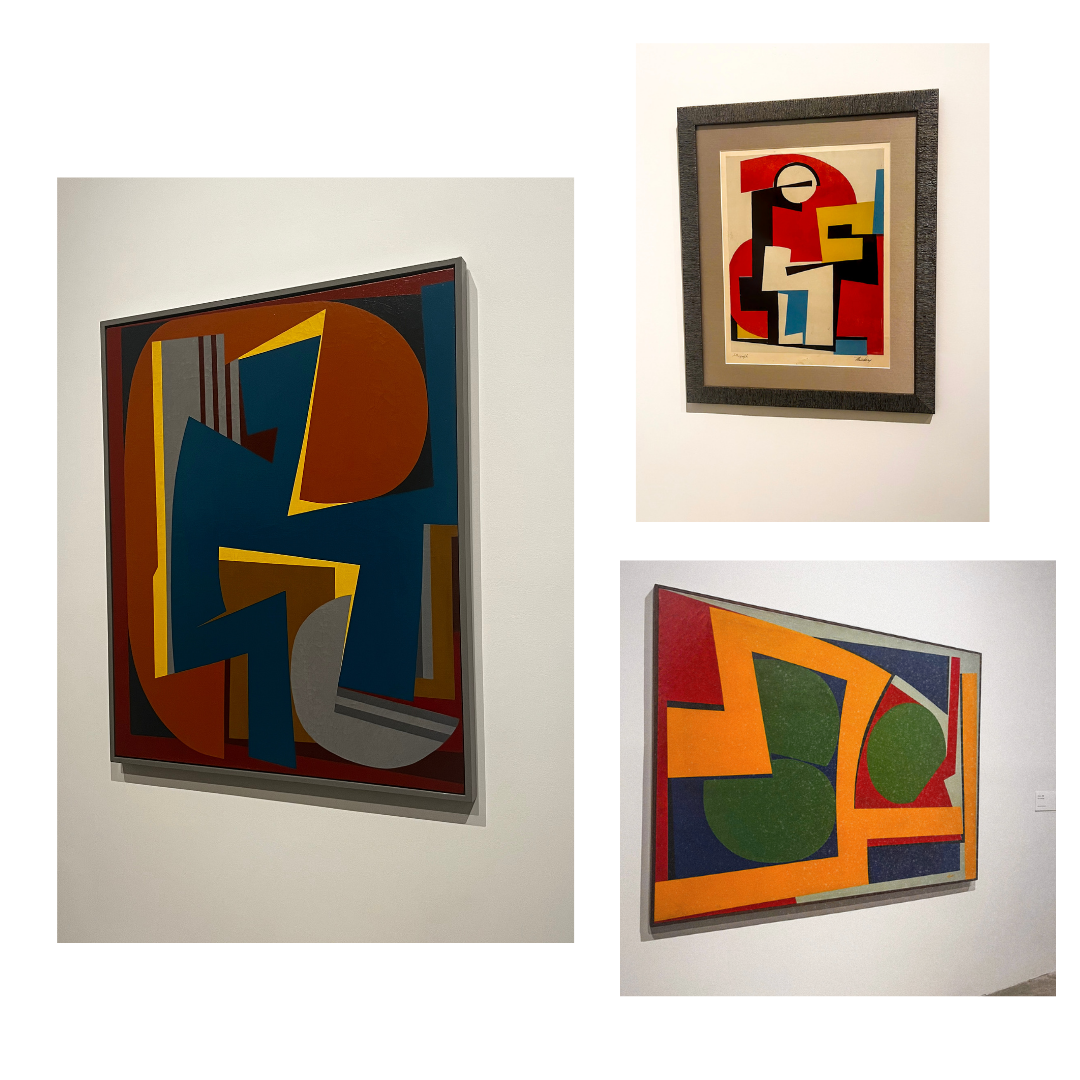
Mavis Pusey Abstract Portaits
Mavis Pusey was a Jamaican artist primarily known for her abstraction and printmaking, but also possessed talents in fashion design, painting, and poetry. When observing her work, it is very clear that geometry and urban landscapes were used as her main inspiration. Her jumbled assortment of shapes and colors creates a rhythmic, dynamic scene that draws the eye in to take in everything on the canvas. With her death in 2019, much of the work in planning and curating the Mobile Images exhibition happened after her transition. Curated by Hallie Ringle and Kiki Teshome, the research for this exhibition started 10 years ago, while there was work by Pusey exhibiting at the Whitney Museum of Art in New York City. What was intriguing about Mavis Pusey and her work was that many people didn’t know much about her abstract creations, even though her peers soared within the art world. With her work being featured in spaces such as the Whitney Museum and the Museum of Modern Art, it would seem she should have had a spotlight on her career. Instead, when collecting work for the exhibition, many could be found in private collections, which makes up most of the work for the Mobile Images exhibition.
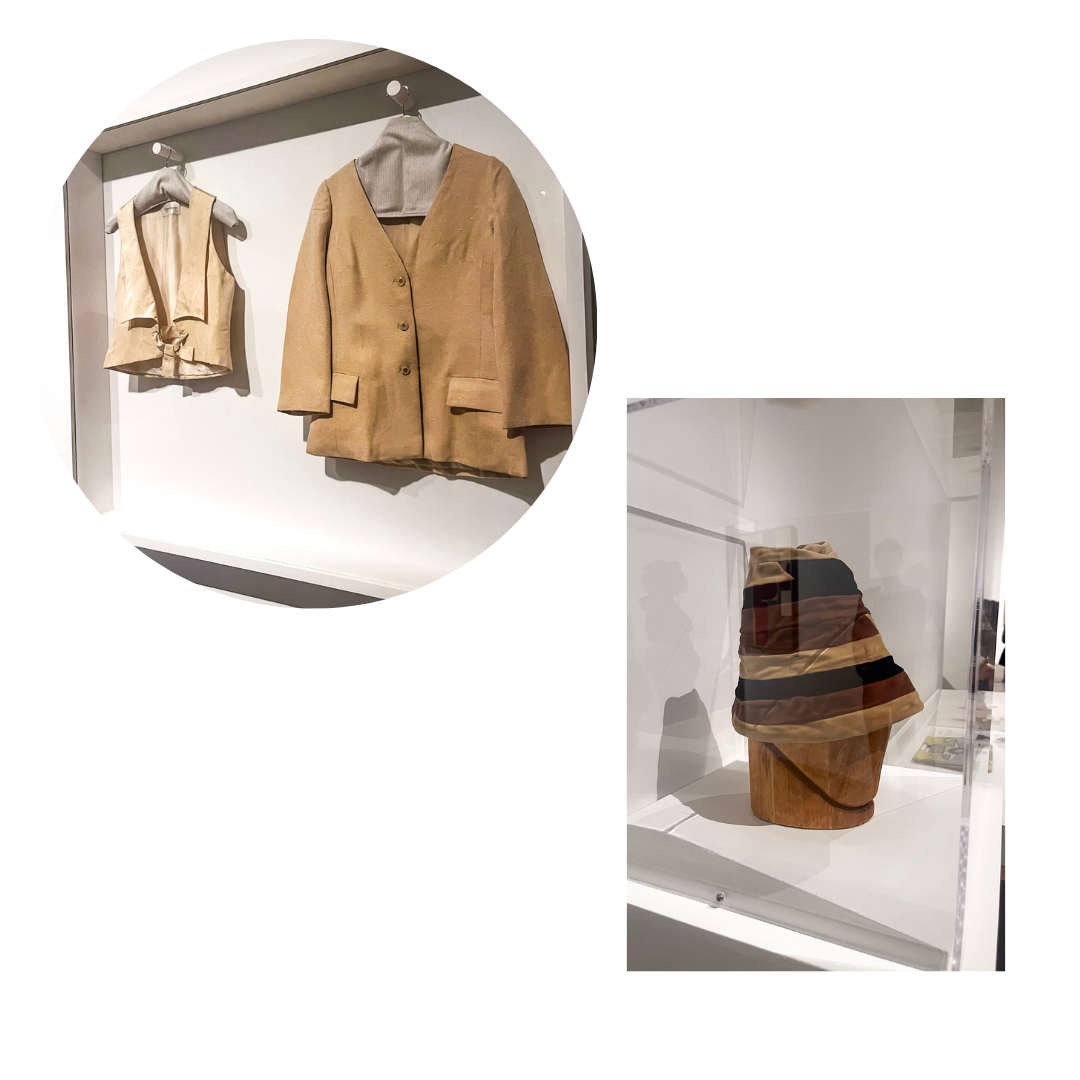
Mavis Pusey Fashion Designs
Her work can be linked with much aesthetics, including cubism, futurism, and, of course, geometric abstraction. The line work of each geometric shape is very precise and exact but still gives the perfect amount of curve and movement without it feeling too contrived or stiff. This may come from her background as a fashion designer, which involved having to be exact with measurements for the body while also being able to find the flow in the fabrics. When you look closely at each of the prints, you can see not just geometric shapes that are focused on the body, but you can also see the forms and bodies within the abstraction. The use of bold colors helps the lines and shapes seem weighted in the frame. What is very noticeable in each work is the influence of music, especially Jazz, with the motion of each body being seen in these portraits. While printmaking is the main attraction of the exhibition, Pusey used many materials and art forms such as lithographs, watercolors, and gouache studies. On each piece, you can see notes of Pusey's handwriting which detail how each work should be seen, how the colors should work together, showing the care and precision each piece took to create.
While the lower level of the Mobile Images exhibition showcases many of the beginning stages of her work, showcasing her fashion work and early portraits, the upper level has a deeper appreciation of her abstraction work. Many of the works, even in the abstract, details life events, her surroundings as she moved around from New York to Paris, and even the people in her life. The works themselves are neither positive nor negative in her storytelling but just are. They have a great way of telling you where she was in her life and makes you feel even more connected to Pusey as not just an artist but as a person. Her abstraction prints are bold, they are daring, and they take up space in the most positive way, just like she did.
While she may not have gotten her flowers as she should have while she was still here, Mavis Pusey has taught us all to see the world in a new way. Not to be afraid to take chances and experiment. Most importantly, to be able to see art not just as expression, but as a powerful way to reshape how we understand the world
