Interview with William Perthes on Just US at Barnes Foundation
I recently had the chance to explore the latest exhibition at the Barnes Foundation, titled Just Us. This showcase features original artwork created by artists from the State Correctional Institution (SCI) Phoenix, a maximum-security prison for men in southeastern Pennsylvania, alongside members of Mural Arts Philadelphia’s Rec Crew, a program focused on job readiness and life skills for young adults impacted by the justice system. This exhibition holds special significance as it highlights the talent and potential of incarcerated individuals. It also raises important questions about who gets to create art and who can claim the title of "artist." Art has the power to humanize those who are incarcerated, allowing them to share their stories and perspectives on the world. This is precisely what Just Us accomplishes through its remarkable displays.
During the opening back in July, I had an opportunity to have a conversation with William Perthes, Bernard C. Watson Director of Adult Education about the exhibition, the importance of art education and the process of collaborating with Mural Arts.
Note: Conversation was shortened for interview
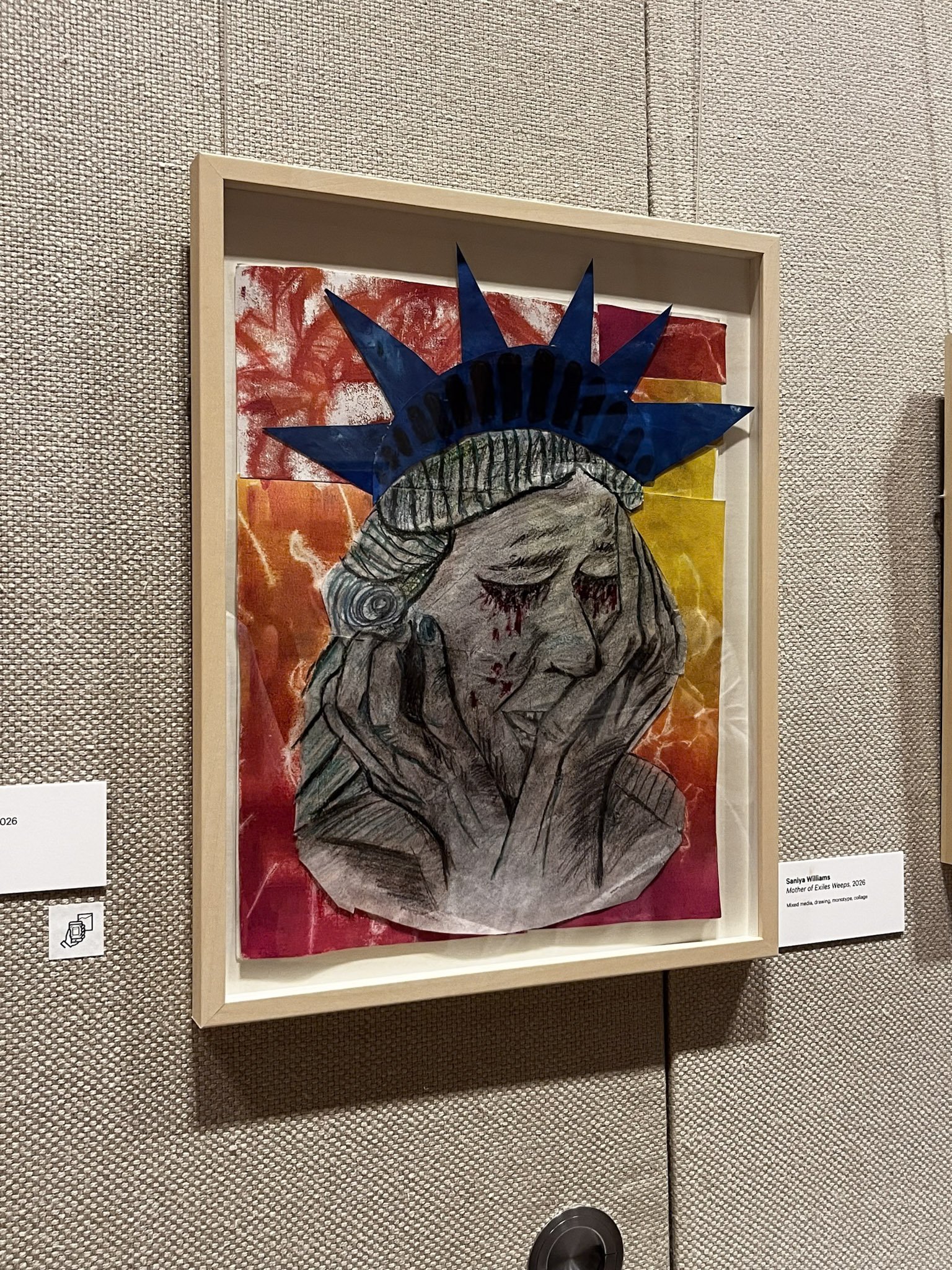
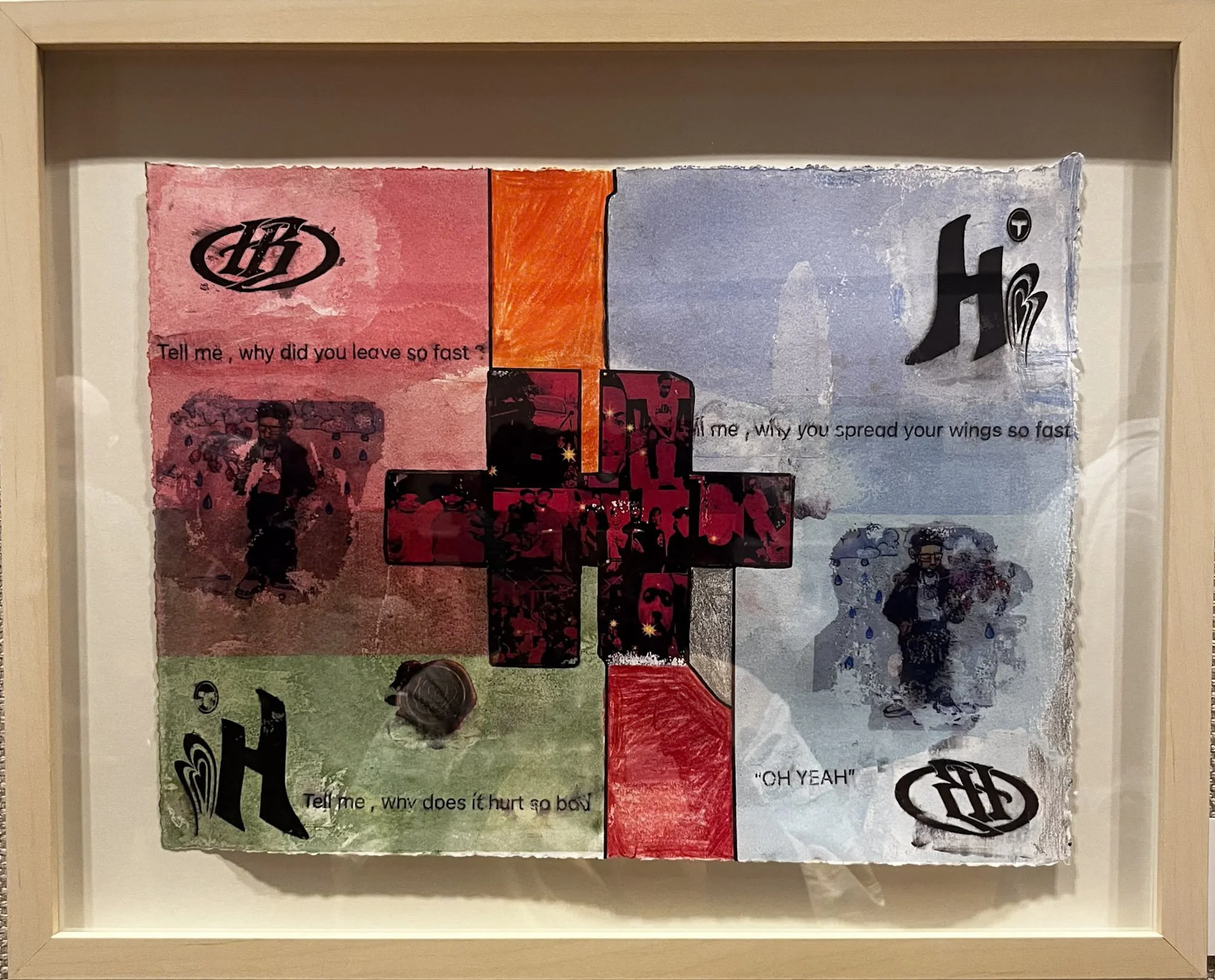
Mother of Exiles Weeps, 2026 Saniya Williams
Keyonna Butler: The first question that I wanted to ask was what was the inspiration behind the exhibition and also the collaboration with Mural Arts Rec Crew?
William Perthes: The collaboration with Mural Arts began in 2017. They had received funding for a restorative justice program, and they were looking for a partner, and the director of restorative justice at the time, Robin Buesman, and I had known each other for a while. Soon after I arrived at Barnes, she reached out to me to see if Barnes would be interested and I said absolutely. Barnes hadn't had done anything in the realm of restorative justice prior to, or at least not much. After that conversation, we started working together. I brought in Christine Stoughton, who is a practicing artist, instructor, and she's had an earlier career as a family psychologist. So, she brings this wonderful tool kit to the program. She came up with the idea of working in a print studio and so we've stuck with that since then. Even after that initial funding came to an end, the project was so powerful, we decided to keep going with it. The first exhibition was in 2018, and then the next year, we decided to expand it. It was originally with the guild, which is the neurology program for younger justice impacted individuals. We decided to expand it to also include the artists from Graterford, and that's been the mix ever since then. So, the exhibition is a combined effort of, this year, the neural large Rec Crew, and the artists at SAI Phoenix.
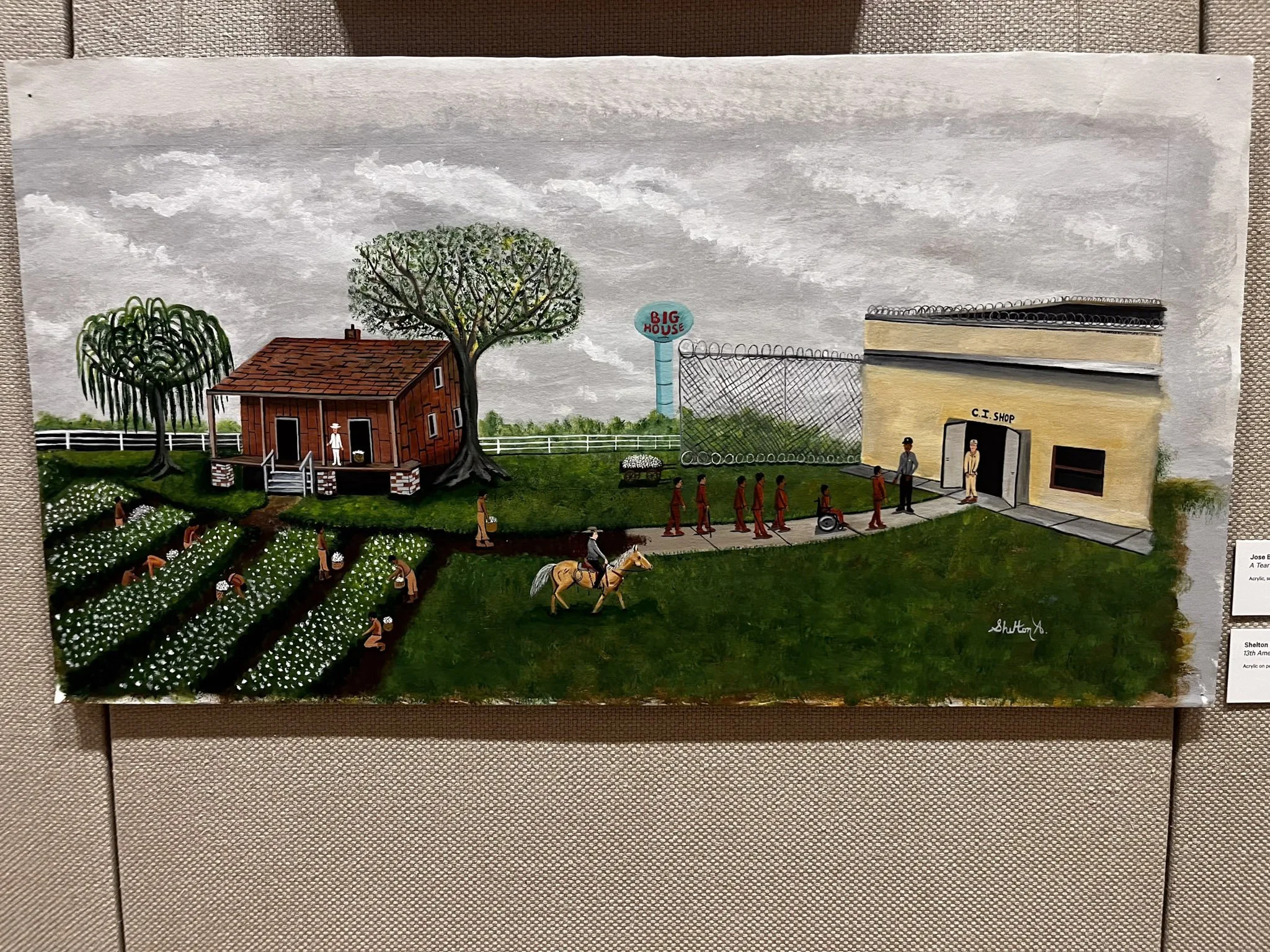
KB: How did you choose which facilities and participants would be part of this program and exhibition?
WP: Mural Arts really guided that. They’ve built strong relationships with institutions over many years. The Reentry Crew is their in‑house program, so that was straightforward. And they’ve had a long relationship with Graterford and now SCI Phoenix. I also had a prior connection with Graterford from teaching there years ago, so when I started visiting again, I ended up reconnecting with men I’d taught twenty years earlier. Some of them I’ve known for twenty‑five years—remarkable artists and individuals.
KB: How do you see art education supporting justice‑impacted people, especially those reentering society?
WP: Art can be incredibly generative for anyone, but especially for people facing challenges. For many in the Reentry Crew, it’s their first experience making art. It’s creative, but also frustrating, and through guidance from Christine and Emma at Second State, they learn to push through that. They end up proud of what they’ve made, and that perseverance is a huge takeaway. Then seeing their work framed and displayed at the Barnes gives them a real sense of accomplishment and recognition—as individuals and as artists.
KB: This year’s theme connects to the America 250 celebration. Was that intentional?
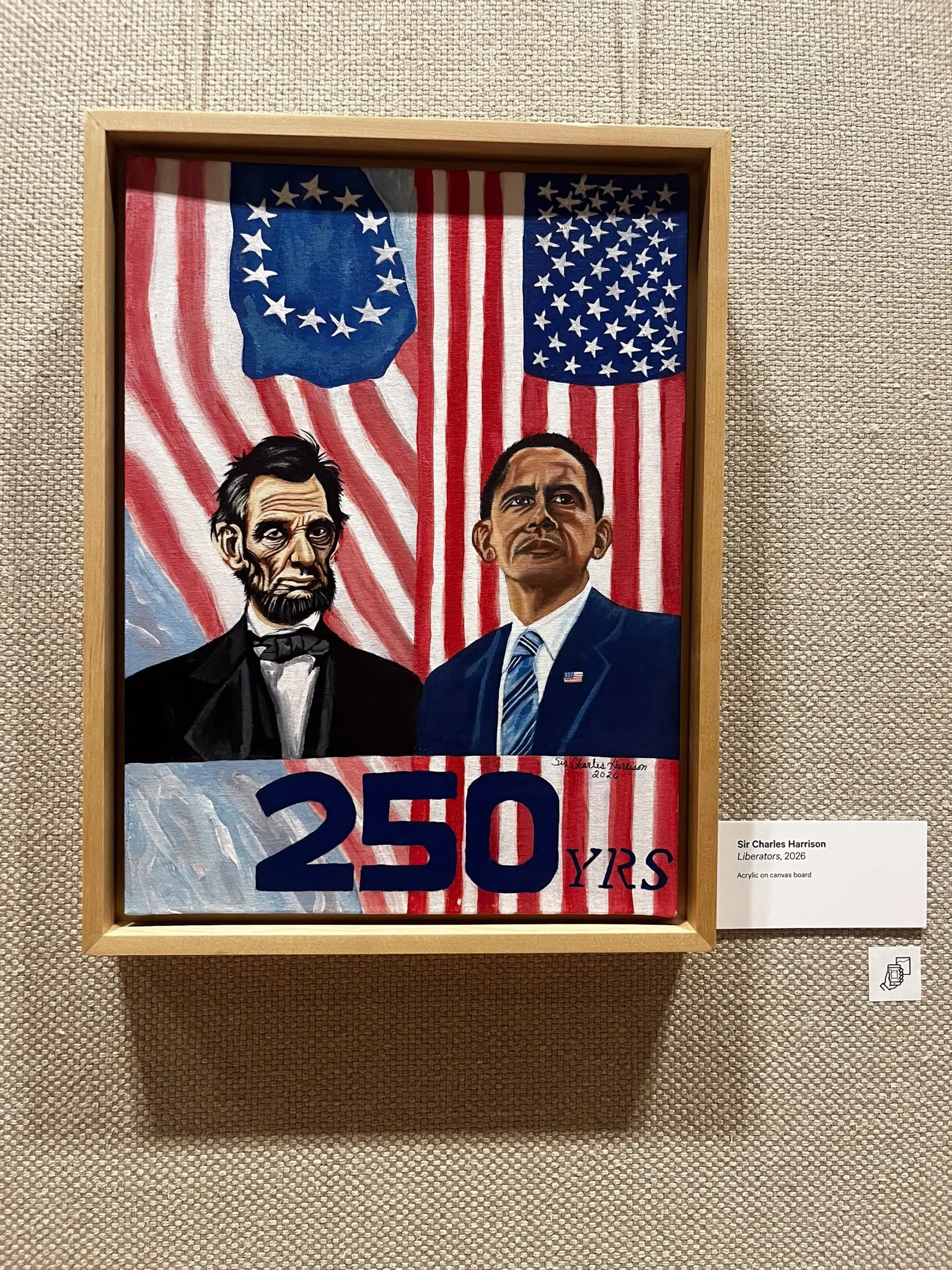
Liberators, 2026, Sir Charles Harrion
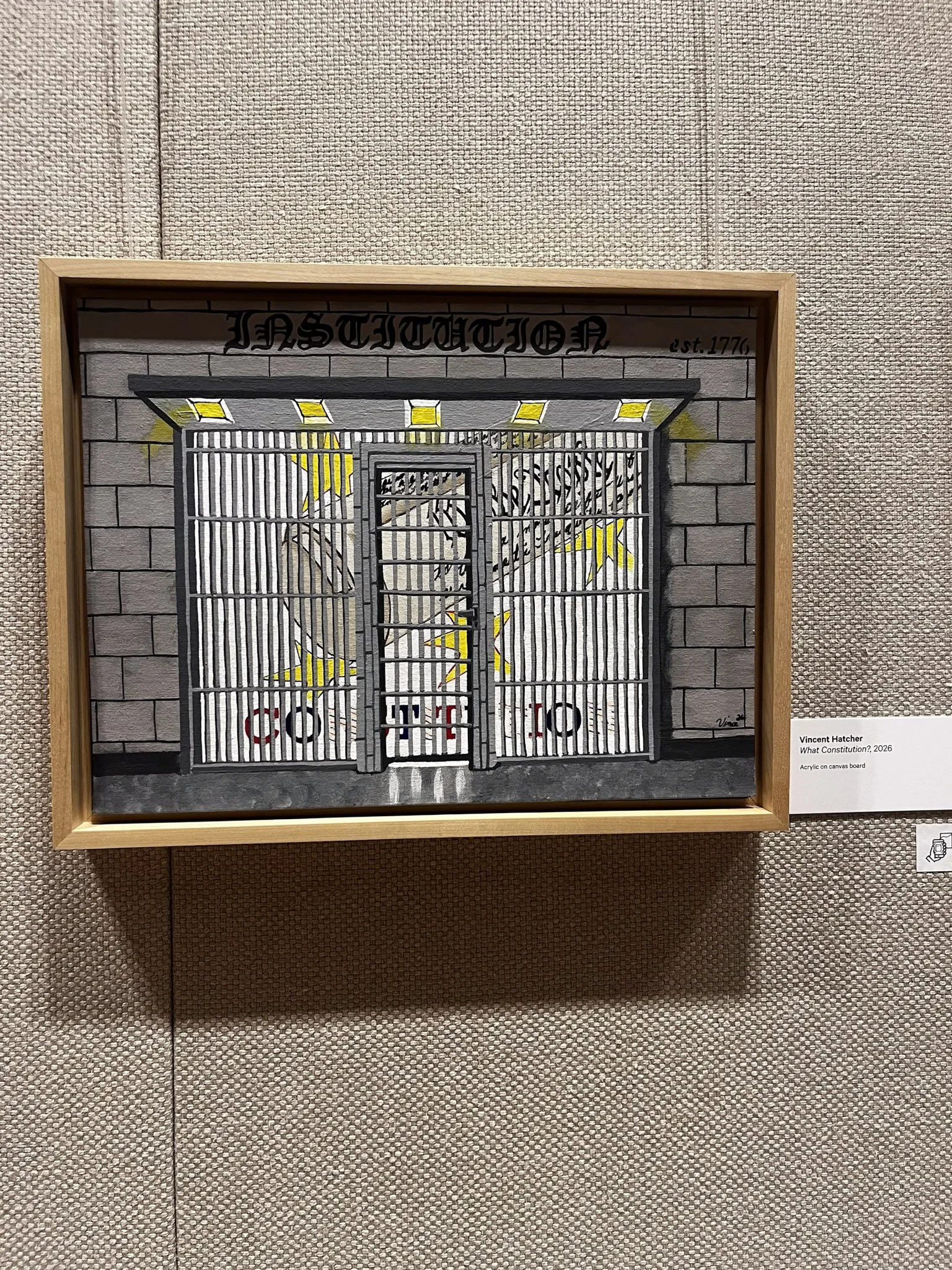
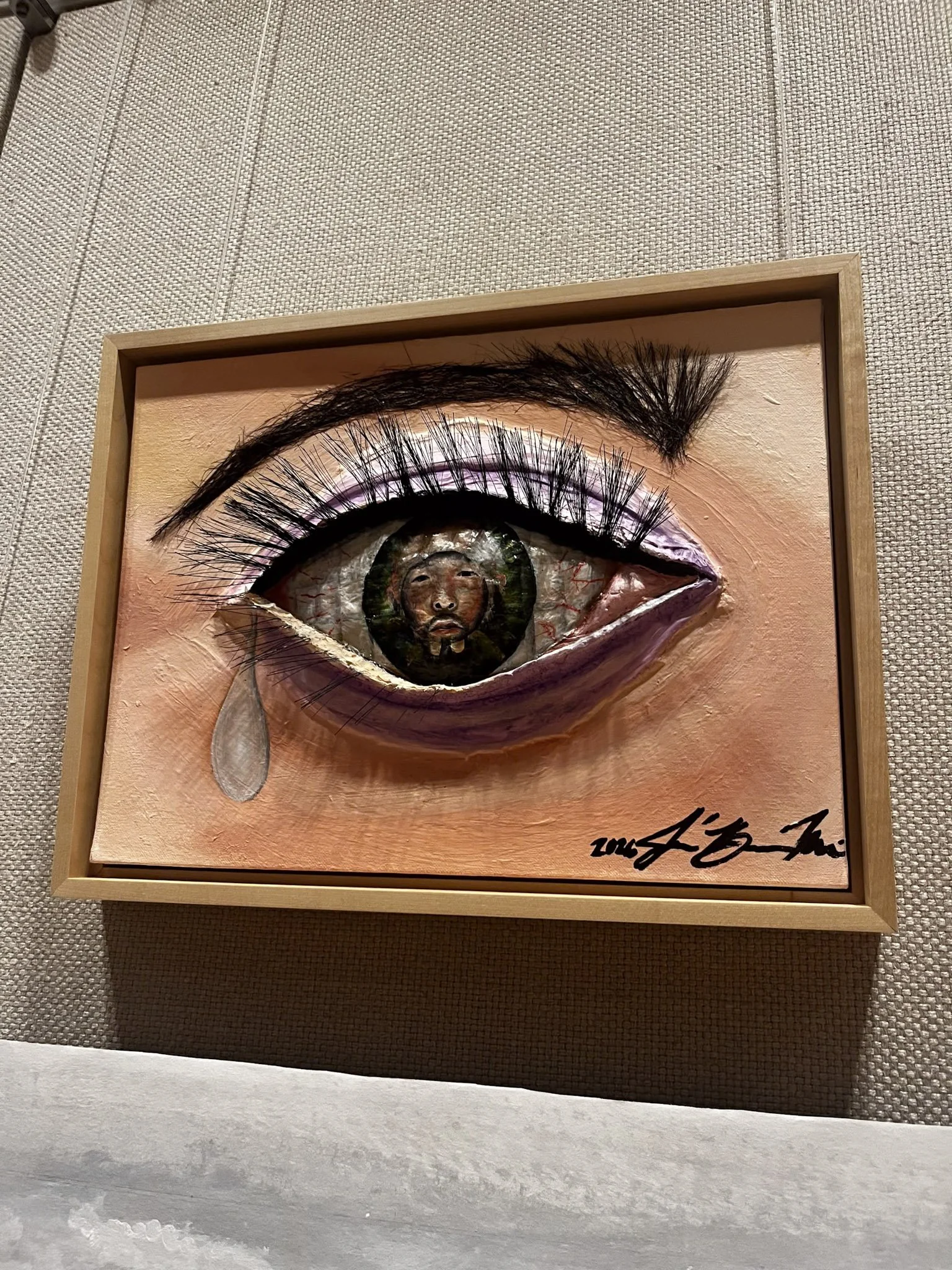
WP: Yes. I wanted the artists to have a voice in this moment. When I asked the Phoenix group to brainstorm themes, there were several ideas, but “Just Us” really resonated. It reflects the community both groups feel, and it plays on “justice,” which is central to their lived experiences. The theme invites reflection rather than dictating content, and the work shows a range of perspectives on what justice means in 2026.
KB: What do you hope viewers take away from the exhibition?
WP: Because the show is inside our permanent collection, visitors encounter it unexpectedly. My hope is that the work resonates—that people see the artists as individuals, not categories—and that it prompts them to think about topics they might not have expected to confront here. Maybe it plants a seed that stays with them later. If it encourages even a bit of reconsideration, that’s a powerful outcome.
The Just US exhibition is on view at the Barnes Foundation until October 12th, 2026