Exhibition Review: Noguchi to Asawa: Designing Postwar American
When I was invited to the press preview for the Noguchi to Asawa: Designing Postwar American currently on view at the Barnes Foundation, I didn’t know what to expect. I have never heard of the artists that were being displayed and I knew very little of the history of Japanese and Japanese American incarnations during World War II. I was very intrigued to learn more about Japanese design influence in America, especially after the war. Included in this exhibition are sculptor and designer Isamu Noguchi (1904–1988), architect and furniture designer George Nakashima (1905–1990), sculptor Leo Amino (b. Taiwan, 1911–1989), graphic designer S. Neil Fujita (b. Territory of Hawaii, 1921–2010), fiber artist and weaver Kay Sekimachi (b. 1926), and sculptor Ruth Asawa (1926–2013). This is the first exhibition that explores how the tumultuous era of Japanese American history formed a foundation for modern art and design in the United States, which is just in time to celebrate the American 250 Semiquincentennial. In celebrating the history of this country, it is also important to highlight the turbulent history especially among marginalized people who have contributed so much to America as we know it. After the success of their Freedom Dreams exhibition, which brought together powerful works by film artists inviting viewers to immerse themselves in the memories, dreams, and histories of Black Americans, I was excited to see what the Barnes would offer in this exhibition highlighting another group of marginalized voices in American history.
After hearing from the curator of the exhibition Cindy Kang, we were finally able to walk through the space. On first view, the space was dark and padded with Black textured walls which is the opposite of the usual stark, white walls that illuminate the space. Some of the first works you see are of the older generation before the imprisonment begins during WW II. One of the works that stood out to me the most was a small radio made of Bakelite and cellulose acetate. Entitled, Radio Nurse, artist Isamu Noguchi created objects that felt very familiar intertwining traditional Japanese design aesthetics with Western modernism, a theme throughout this exhibition. What I loved about Noguchi’s Radio Nurse and other works apart from the exhibition was the art of the ordinary. To take a subject like a radio – inspired by a baby monitor, to turn it into a sculptural work of art showcases both the simplicity and beauty in Noguchi art style. This take on making art out of functional, tactile materials came up again as we entered the area of works created during World War II and the incarnation of Japanese and Japanese American people.
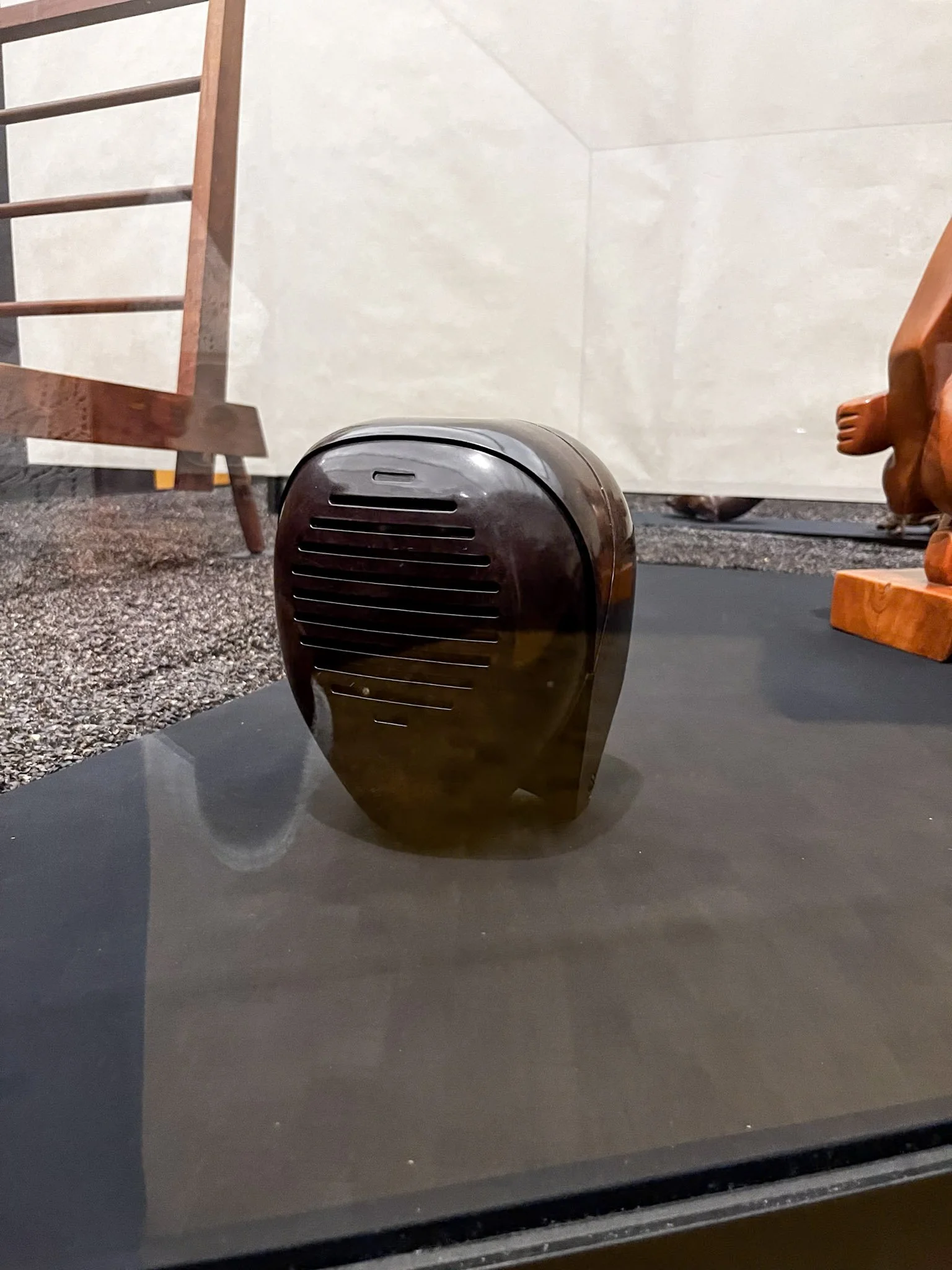
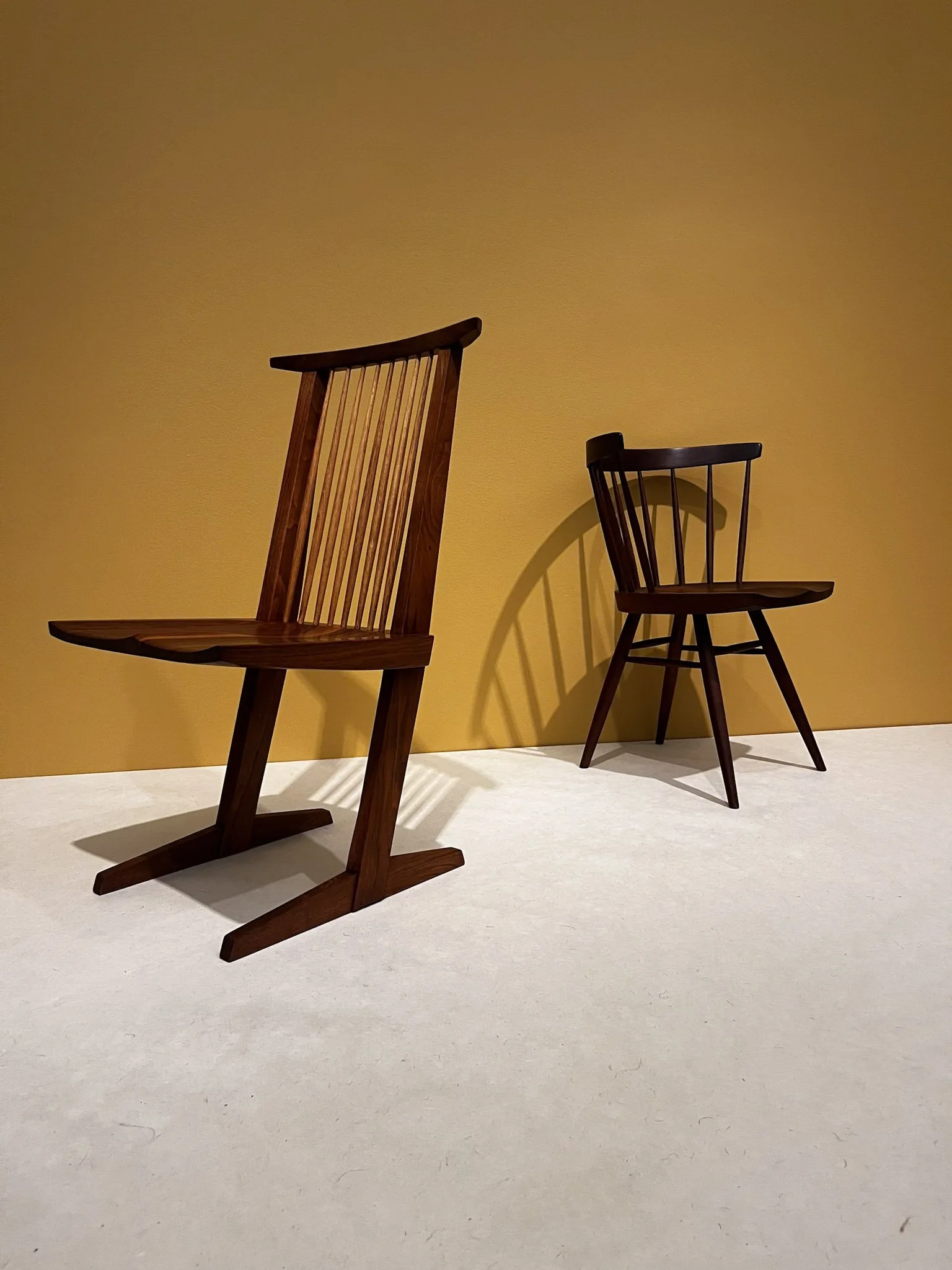
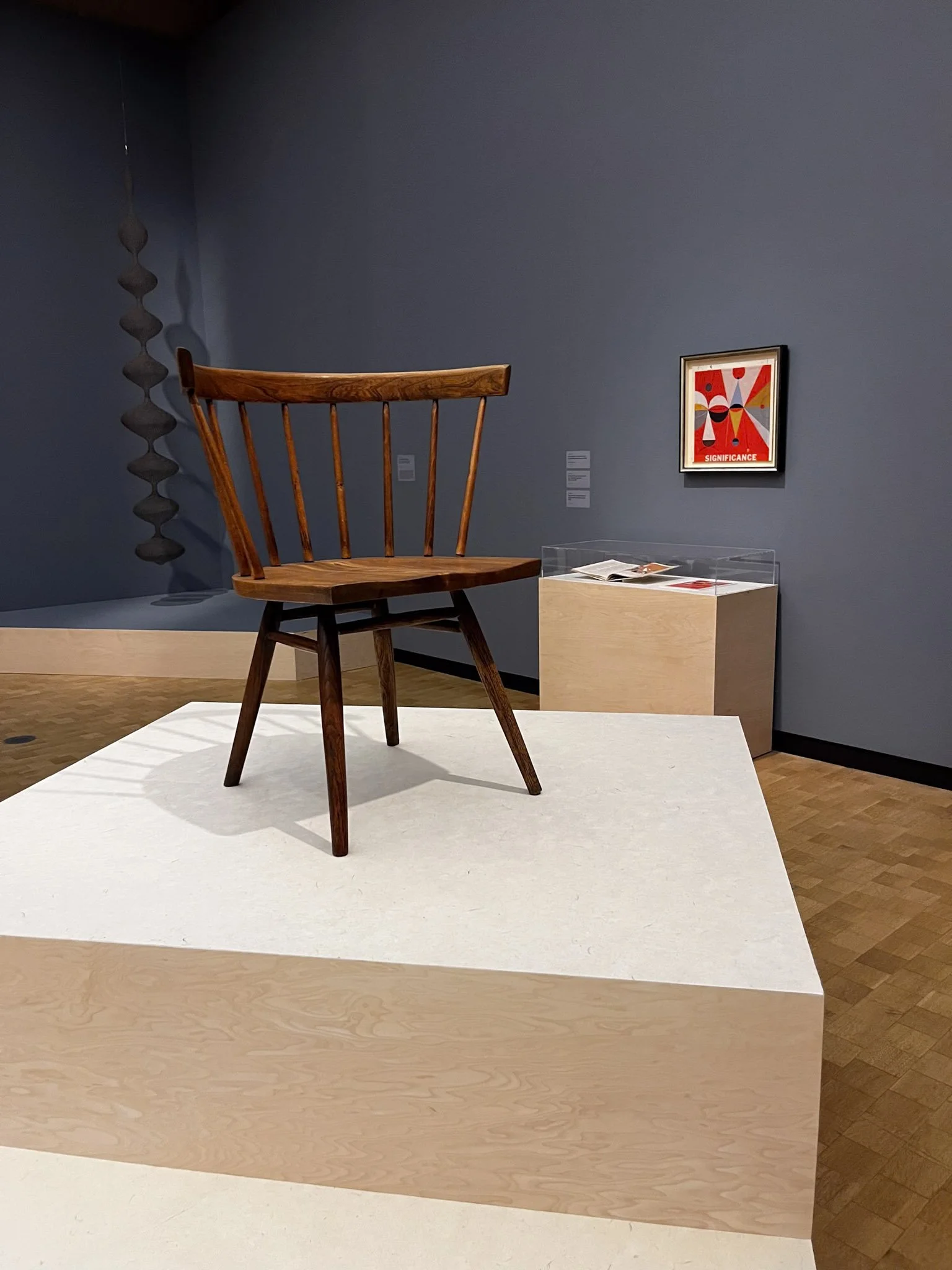
Isamu Noguchi (1904- 1988) Radio Nurse, 1937. Bakelite, cellulose acetate. Philadelphia Museum of Art.Another installation of art that stood out to me was the collection of branches and works made of wood from artists George Nakashima and Isamu Noguchi. Since many who were incarcerated had no essentials such as furniture, many would collect branches and wood to create their own essentials for their home. Countless of the works in this collection were inspired by stories such as the Dried Bitterbrush collected by the Nakashimas in Minidoka, Idaho. The collection of the branches is symbolic of the time Nakashima, his wife and their infant daughter were forcibly removed from their home and imprisoned at the Minidoka concentration camps in Idaho. While the piece can harbor the history of pain and trauma, it can showcase the willingness to heal through the creation of art and being able to bring light to a history that is often not talked about.
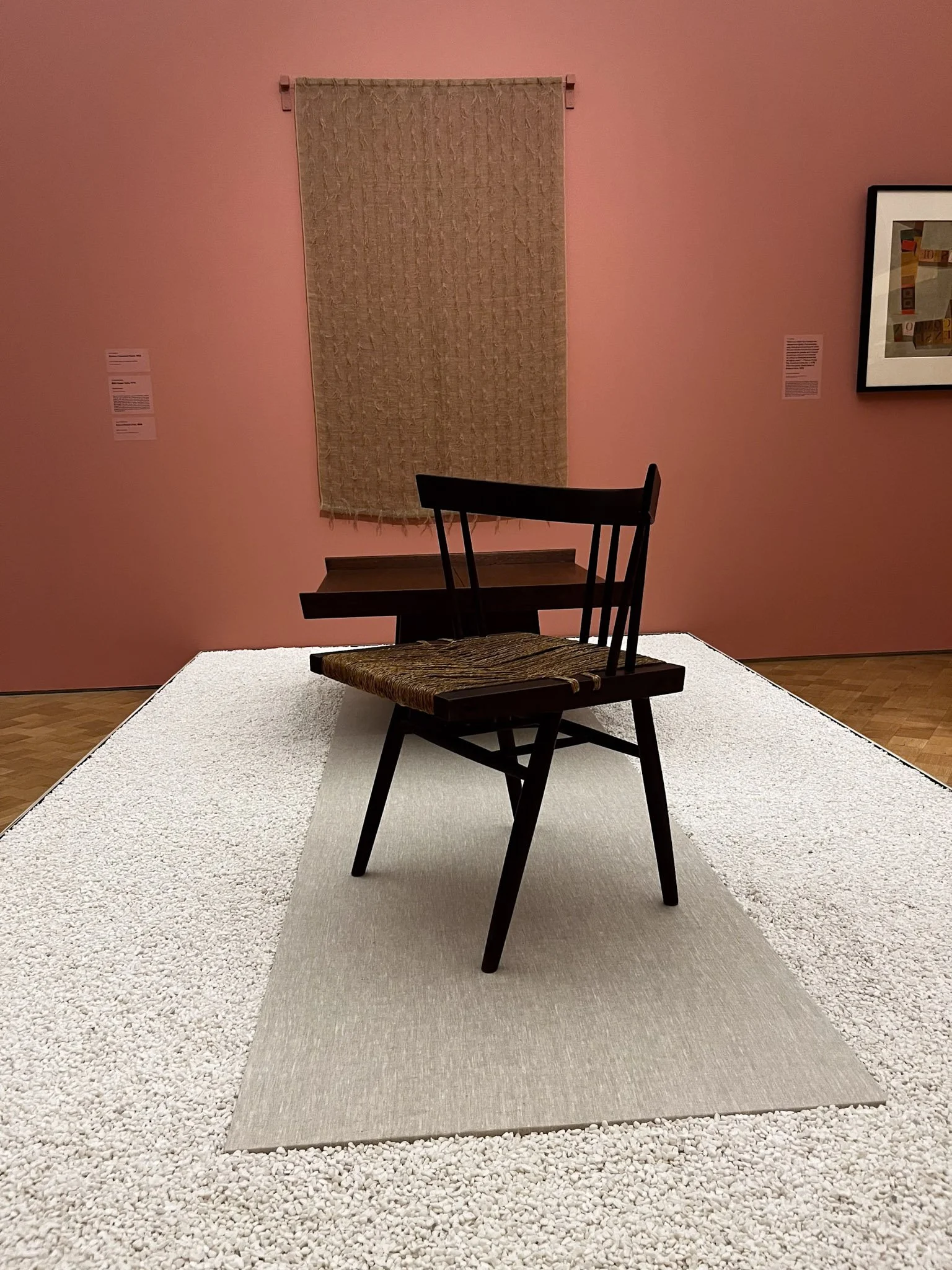

George Nakashima (1905–1990). Milk House Table, 1944. Teak and cypress, 17 1/4 × 37 1/4 × 33 1/2 in. (43.8 × 94.6 × 85.1 cm). Nakashima Foundation for Peace | Image on Right: Photo by Christian GiannelliIn moving to the Minor Arts section of the exhibition, many of the works focused on craft and design works that leaned into the American domestic interior. Contrary to what is considered major arts such as paintings and sculptors, many of the works were small, functional works that would have been seen in anyone’s home during that time.
George Nakashima’s Milk House Table was another prime example of creating art out of the ordinary, familiar objects we see in everyday life. What was cool to learn about this particular piece was that it was conceived in 1944 in a small milk house on Antonin Raymond’s farm where Nakashima stayed after leaving a Japanese American internment camp. Many of the works had this quality where the art that was created looked uncomplicated but in fact was created in such labor intensive, almost repetitive nature. This could come from the experiences that many of the artists had while in the incarnation camps. Another option was in creation, it was a way to take back control, a control that was lost when they were removed from their homes and into prisons. In creating this labor-intensive works of art, this was a way to not be seen as a victim. This was a way to take up space without being seen.
Being seen through their artwork seems like something that many of the artists worked through. Reading a quote from artist Ruth Awasa,” I am able to take a wire line…and define the air without stealing it from anyone. You can see right through most of my sculpture” it tells a story of wanting stillness after such tumultuous experiences in America. Even when looking at the artwork itself, most of the work had a quietness that sat in the space. Not only was the artwork itself invisible but it seems so was the artists themselves especially after having to find their way while settling into a new America, a new world around them.
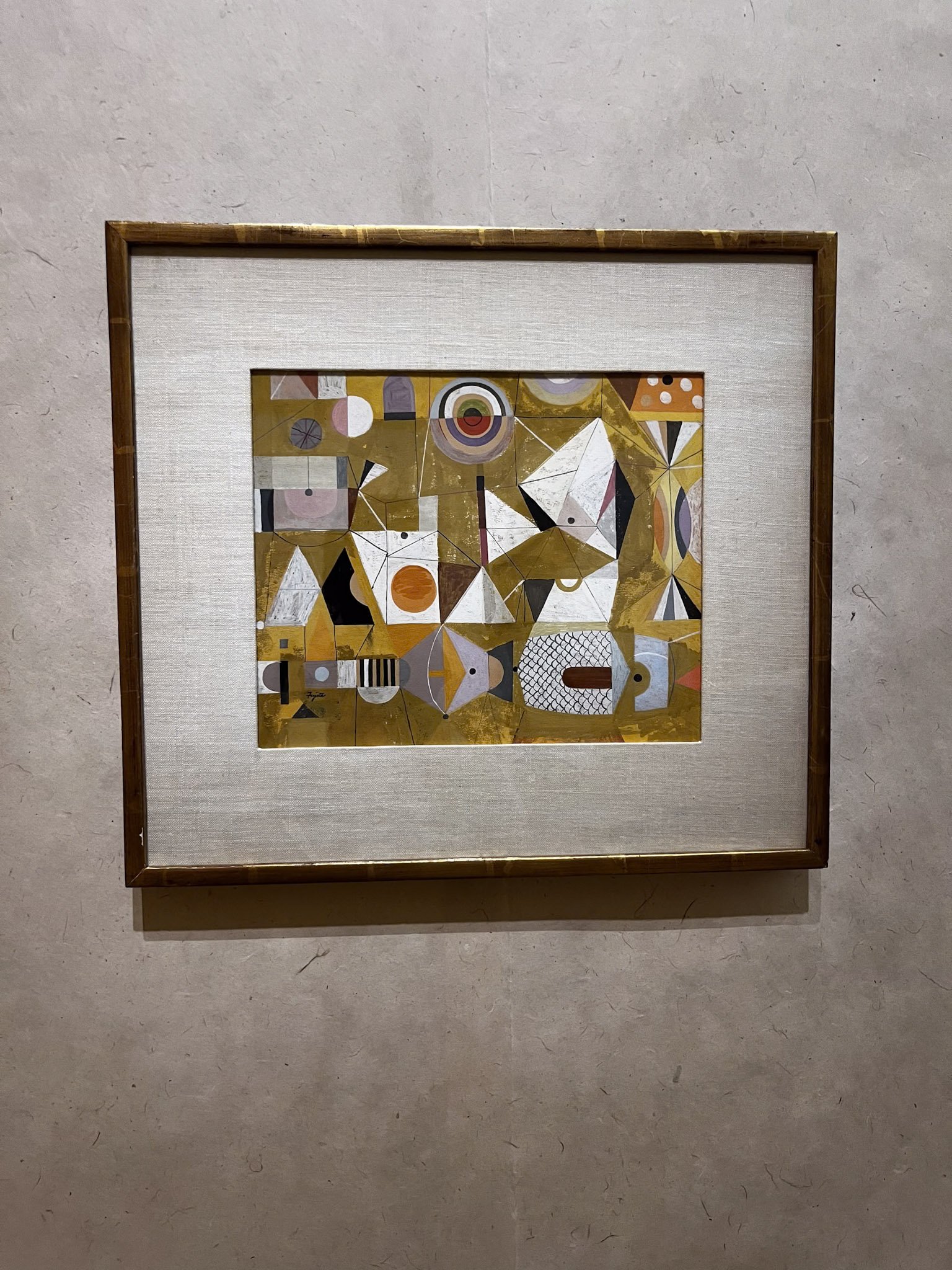
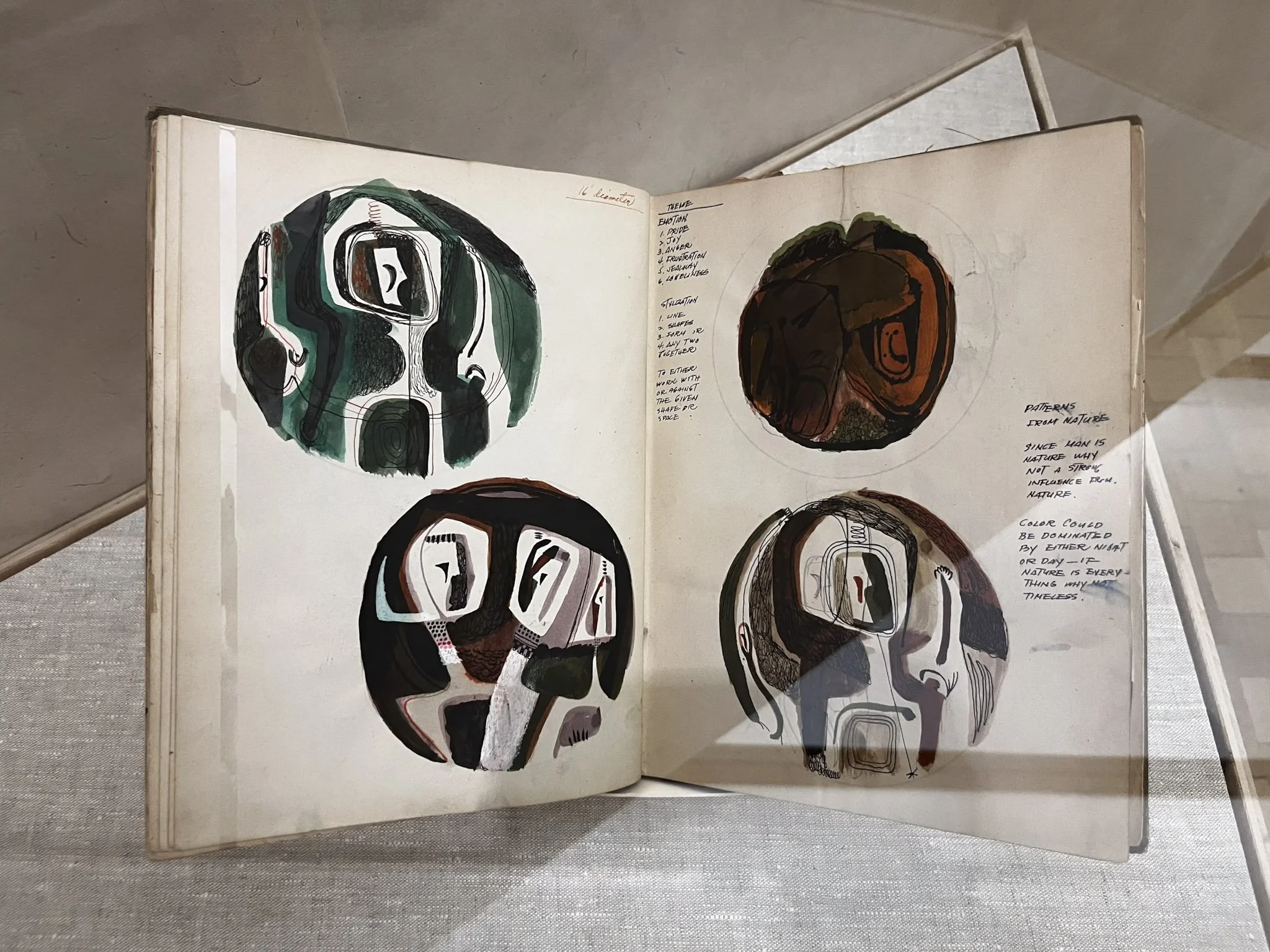
This concept of invisibility when it comes to the six artists showcasing in this exhibition really hits home when you notice that their contributions, like many other Asian Americans, have shaped the aesthetics of American culture. For instance, looking at the work of S. Neil Fujita, you will instantly recognize his art style without ever knowing his name. Fujita work has shaped the look of jazz albums cover, even contributing to the design of The Godfather, a book and film that is well-loved by many people, yet many do not know the story of the man behind the work. His work can be described as bold, experimental, colorful and lots of movement, very similar to the genre of jazz music. Fujita designed over 50 covers of jazz albums from artists such as Miles Davis, Glenn Gould, Dave Brubeck and countless others. S. Neil Fujita is just one of the countless other Asian American artists who shaped the design and culture of America.

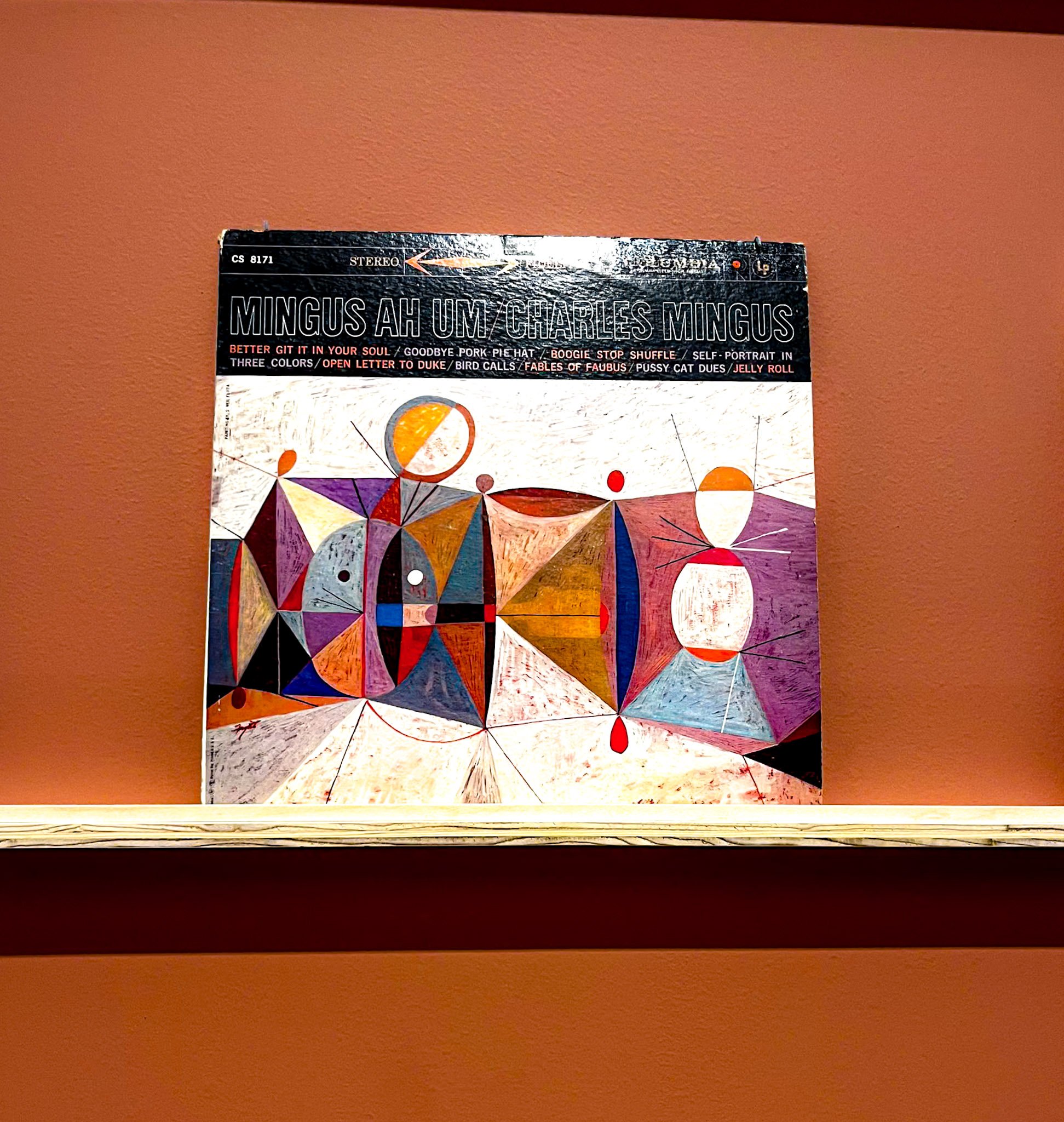
Image on Left: S. Neil Fujita (1921–2010). Composition for United Aircraft Corporation advertisement, 1959. Mixed media on board, 13 3/4 × 13 3/4 in. (34.9 × 34.9 cm). Private collection (© 2026 Estate of S. Neil Fujita. Heritage Auctions / HA.com) | Image on Right: Mingus Ah Um / Charles Mingus Album CoverWhen we had the opportunity to hear from the exhibition designer, Stephanie Goto, she shared insights into the exhibition's spiral design. Historically, spirals symbolize personal growth, the non-linear path of life, and the ongoing expansion of human consciousness. This exhibition beautifully illustrates the journeys of all six artists, showcasing how their experiences contribute to the fabric of American culture. Through challenges, they find ways to foster their own growth while also aiding in the development of the nation as a whole. Each painting, textile, piece of furniture, or sculpture carries an untold history—one that can broaden our understanding of what it means to occupy a space.
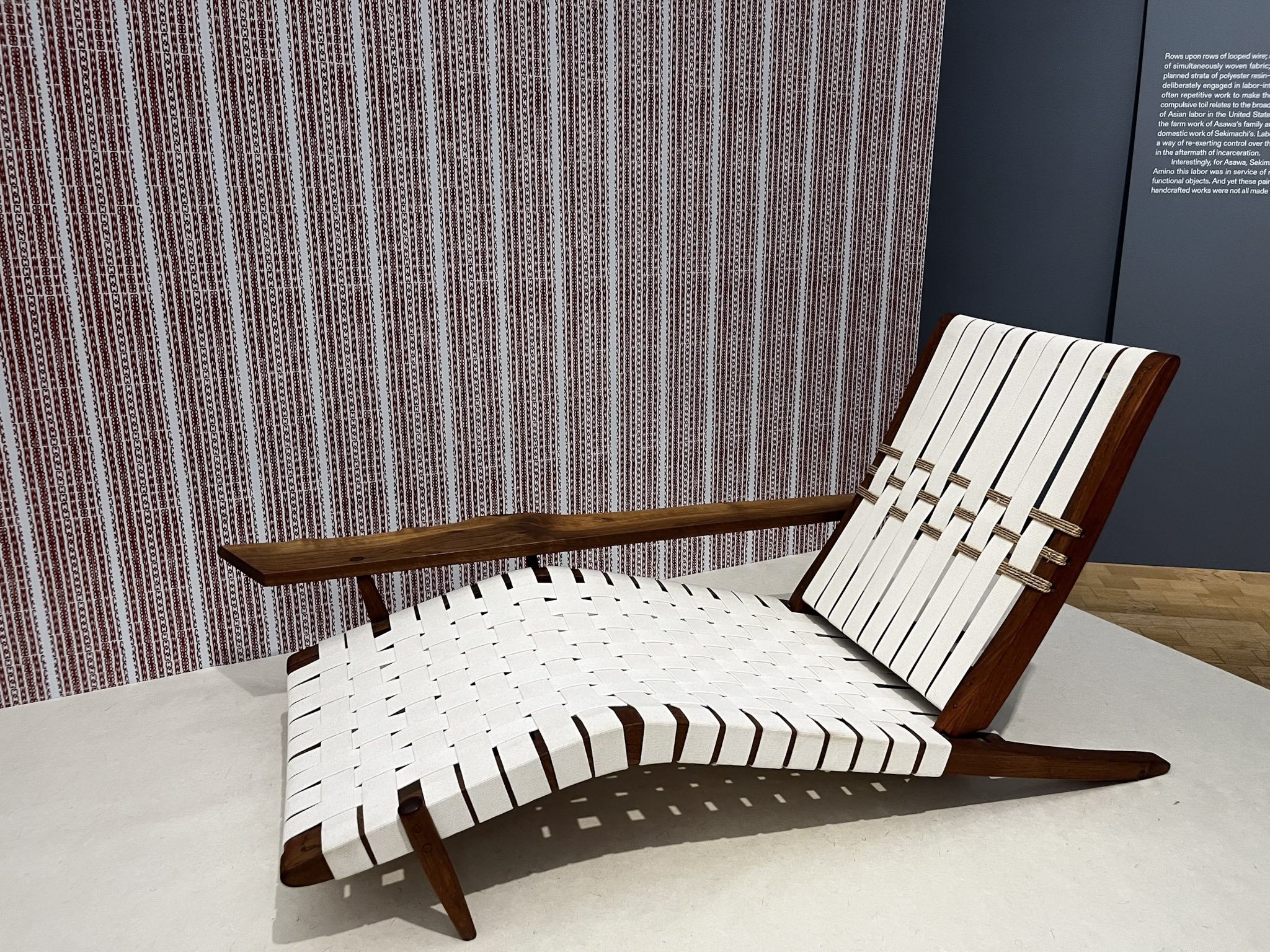
Noguchi to Asawa: Designing Postwar American is on view at the Barnes Foundation until January 10th, 2027